
The Lean Leader Green Belt Series are designed and developed specifically for Team Leaders and Supervisors. These series are at a higher standard than the shop floor series. When a staff member completes all the 12 modules he / she can be awarded a "Lean Leader" certificate and can lead his team in the successful application of various Lean principles.

The 12 are modules:
1. Lead Change – 116 slides
2. Implement a Lean System – 44 slides
3. Facilitate Continuous Improvement – 46 slides
4. Problem Solving – 40 slides
5. Lead 5S – 72 slides
6. Improve Cost Factors – 50
7. Facilitate Quick Changeovers – 70 slides
8. Facilitate JIT – 46 slides
9. Facilitate Proactive Maintenance – 82 slides
10. Mistake Proof a Process – 49 slides
11. Facilitate Balanced Scorecard Approach – 37 slides
12. Ensure Process Improvements are Sustained – 49 slides
The 5th Module "Lead 5S" covers the following topics:
• Introduction to 5S
• Facilitating 5S
• Monitoring 5S
• Improving 5S
• Workplace projects
You can also buy all the 12 modules at a 25% discounted as a bundled product.
Also add other presentations depending on your requirements, such as Kanban Implementation, Heijunka Implementation, Lean Assessment, and Lean Leader and Lean Culture Surveys.
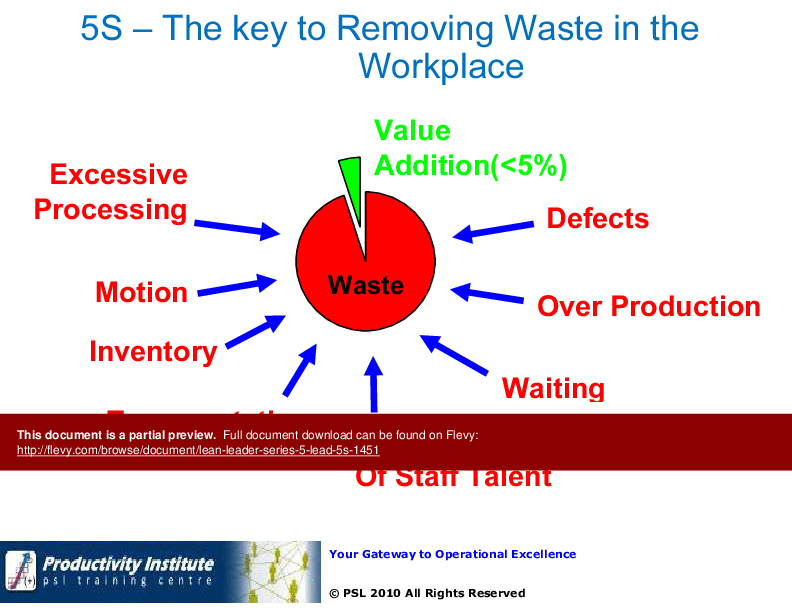
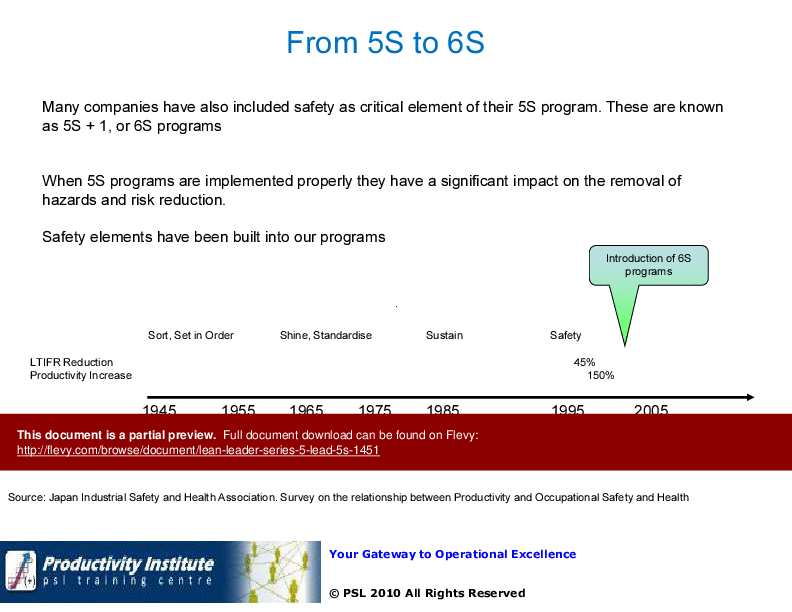
This module delves into the critical aspects of waste elimination through the 5S methodology, emphasizing the importance of value addition and the reduction of non-value-adding activities. It provides a comprehensive guide on transitioning from 5S to 6S by integrating safety into the framework, significantly enhancing hazard removal and risk reduction. The module includes detailed self-assessment forms, action plans, and tools to ensure that 5S principles are effectively implemented and sustained in the workplace.
Participants will gain hands-on experience with practical tools and templates, such as 5S assessment forms, improvement opportunity sheets, and 5S tags. The module also covers advanced topics like point-of-use storage, replenishment signals, and color coding for safety and efficiency. By the end of the training, leaders will be equipped to facilitate 5S projects, develop 5S schedules, and ensure that procedures reflect 5S principles, driving their teams towards operational excellence.
Got a question about the product? Email us at support@flevy.com or ask the author directly by using the "Ask the Author a Question" form. If you cannot view the preview above this document description, go here to view the large preview instead.
Executive Summary
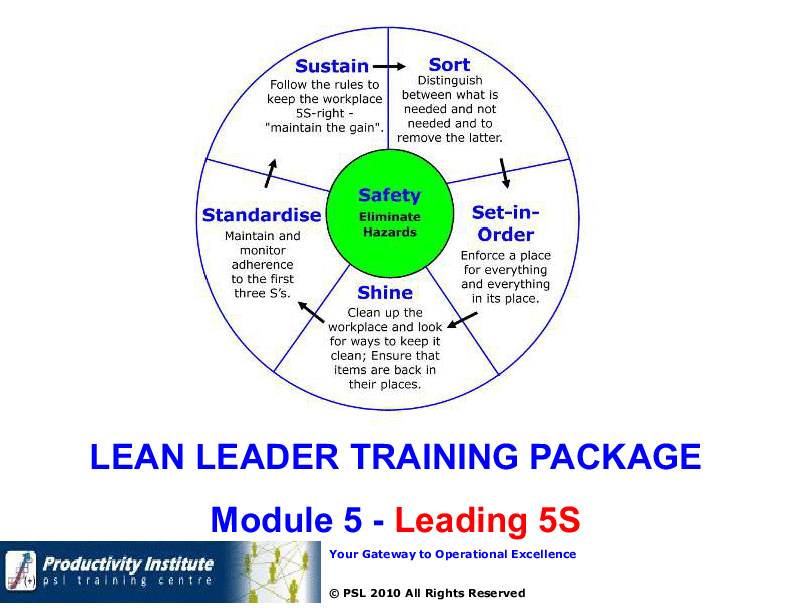
The Lean Leader GB Series 5 - Lead 5S presentation is a comprehensive training module designed to equip leaders with the tools and methodologies necessary for implementing the 5S system in the workplace. Developed by a certified LSS Master Black Belt with extensive global training experience, this presentation focuses on enhancing workplace organization, visual management, and safety. By utilizing the 5S principles—Sort, Set in Order, Shine, Standardize, and Sustain—participants will learn to eliminate waste, improve efficiency, and foster a culture of continuous improvement.
Who This Is For and When to Use
• Operations Managers aiming to streamline processes and enhance workplace efficiency
• Team Leaders responsible for implementing Lean methodologies in their departments
• Safety Officers focused on reducing hazards and improving workplace safety
• Continuous Improvement Teams seeking structured approaches to enhance productivity
Best-fit moments to use this deck:
• During Lean transformation initiatives to establish foundational practices
• In training sessions aimed at fostering a culture of continuous improvement
• When conducting workplace audits to assess current 5S practices
Learning Objectives
• Define the 5S methodology and its significance in Lean practices
• Build a structured plan for implementing 5S in the workplace
• Establish visual management techniques to enhance communication and efficiency
• Identify and eliminate waste through effective sorting and organization
• Create a sustainable culture of cleanliness and order in the workplace
• Develop assessment tools to monitor and improve 5S practices continuously
Table of Contents
• Introduction to 5S (page 3)
• Facilitating 5S (page 5)
• Monitoring 5S (page 10)
• Improving 5S (page 15)
• Workplace Projects (page 20)
Primary Topics Covered
• Introduction to 5S - An overview of the 5S system, its origins, and its role in Lean methodologies.
• Facilitating 5S - Techniques for leading 5S initiatives, including team engagement and project setup.
• Monitoring 5S - Strategies for assessing the effectiveness of 5S implementation through self-assessment tools.
• Improving 5S - Continuous improvement practices to enhance and sustain 5S efforts over time.
• Workplace Projects - Practical applications of 5S principles through real-world projects and team activities.
• Visual Workplaces - The importance of visual management in maintaining a clean and organized workspace.
Deliverables, Templates, and Tools
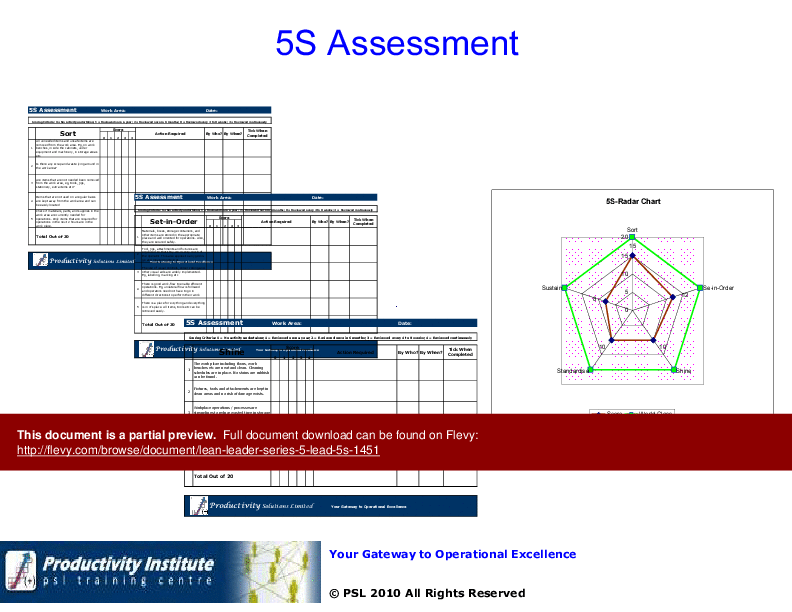
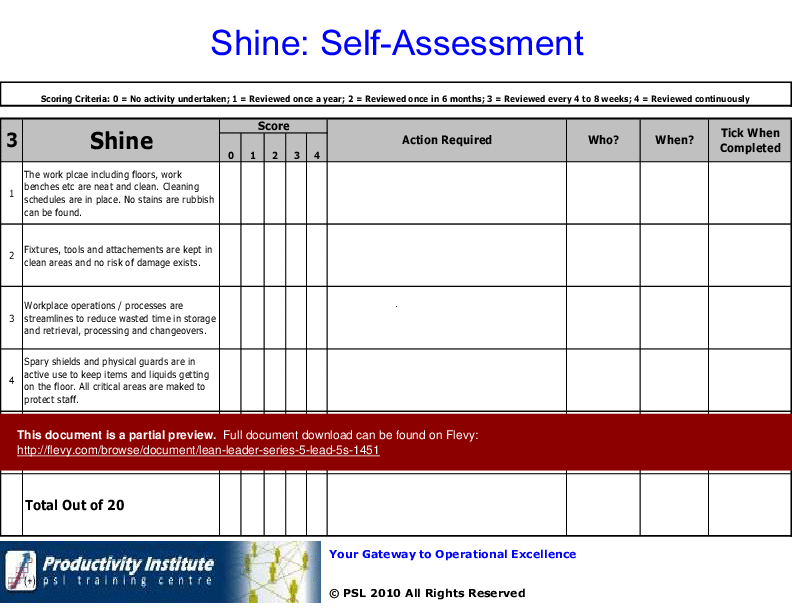
• 5S Assessment Forms for evaluating current practices
• Improvement Opportunity Sheets for identifying areas for enhancement
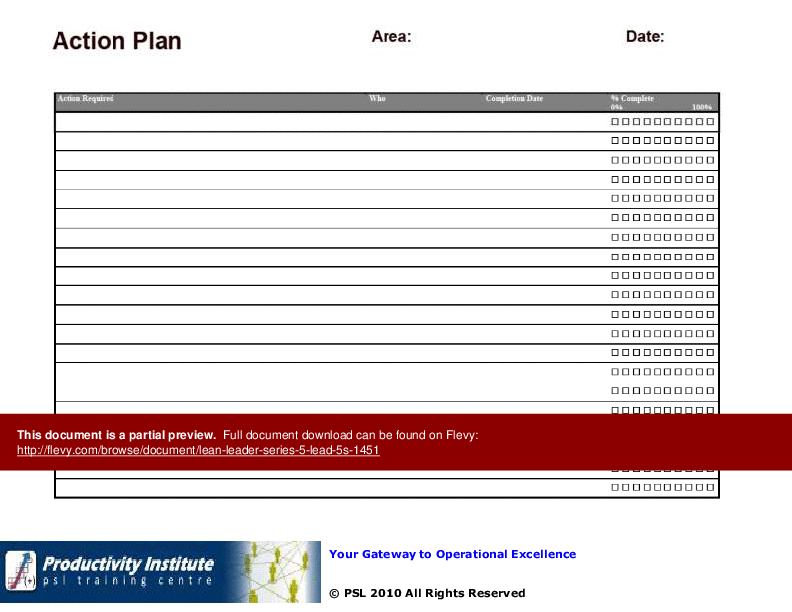
• Action Plans to outline steps for implementing 5S
• 5S Tags for labeling and organizing items in the workplace
Slide Highlights
• Visual representation of the 5S cycle and its components
• Examples of effective workplace organization before and after 5S implementation
• Assessment tools to measure progress and identify non-conformances
• Case studies showcasing successful 5S projects
Potential Workshop Agenda
Introduction to 5S (30 minutes)
• Overview of 5S principles and their benefits
• Discussion on the importance of workplace organization
Facilitating 5S (60 minutes)
• Group activity on sorting and organizing items
• Team brainstorming on potential 5S projects
Monitoring and Improving 5S (45 minutes)
• Review of assessment tools and self-assessment techniques
• Discussion on continuous improvement practices
Customization Guidance
• Tailor the 5S implementation plan to fit specific workplace needs and challenges
• Adjust assessment criteria based on the unique characteristics of the work environment
• Incorporate organizational terminology and metrics to align with company standards
Secondary Topics Covered
• The role of safety in 5S programs
• Techniques for visual management and workplace communication
• Strategies for engaging team members in continuous improvement activitiesDocument FAQ
What is the purpose of 5S?
5S aims to create a clean, organized, and efficient workplace by eliminating waste and enhancing productivity through systematic organization.
How can I implement 5S in my workplace?
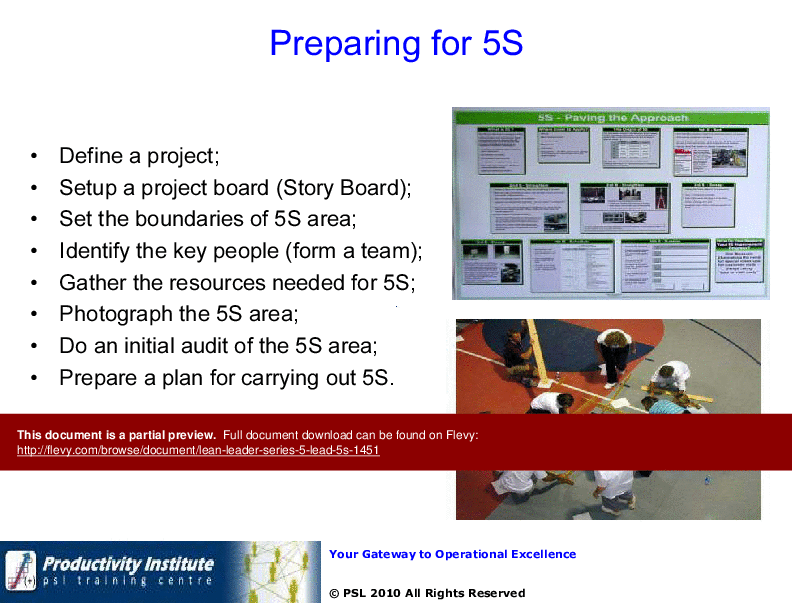
Begin by defining a project, setting boundaries for the 5S area, and engaging team members in sorting and organizing items. Utilize assessment tools to monitor progress.
What are the key components of 5S?
The key components are Sort, Set in Order, Shine, Standardize, and Sustain, each focusing on different aspects of workplace organization and efficiency.
How do I measure the success of 5S implementation?
Utilize self-assessment tools and performance trackers to evaluate progress and identify areas for improvement regularly.
What role does visual management play in 5S?
Visual management enhances communication and efficiency by providing clear, accessible information about workplace organization and standards.
How often should 5S assessments be conducted?
Regular assessments should be conducted at least every 4 to eight weeks to ensure ongoing compliance and improvement.
What is the significance of the Red Tag activity?
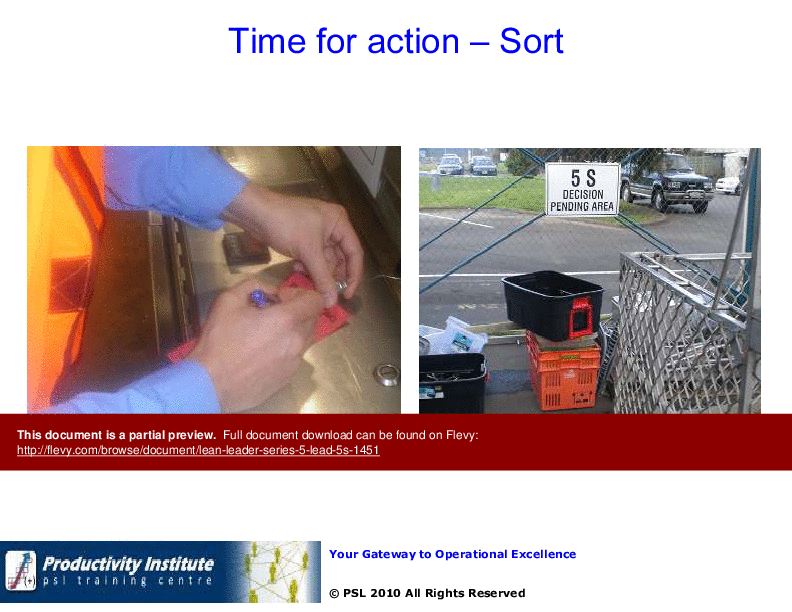
The Red Tag activity helps identify and remove unnecessary items from the workplace, promoting a clutter-free environment.
How can I sustain the improvements made through 5S?
Encourage continuous improvement activities, regular reviews, and management commitment to maintain the standards established through 5S.
Glossary
• 5S - A Lean methodology focused on workplace organization: Sort, Set in Order, Shine, Standardize, Sustain.
• Visual Management - Techniques used to convey information clearly and efficiently in the workplace.
• Red Tag - A label used to identify items that are unnecessary or need to be disposed of during the sorting process.
• Continuous Improvement - Ongoing efforts to enhance products, services, or processes.
• Self-Assessment - A process for evaluating current practices against established standards.
• Waste - Any activity that does not add value to the product or service.
• Standardization - Establishing consistent practices and procedures to maintain quality and efficiency.
• Engagement - Involving team members in the 5S process to foster ownership and accountability.
• Safety - The condition of being protected from potential harm or hazards in the workplace.
• Workflow - The sequence of processes through which a piece of work passes from initiation to completion.
• Action Plan - A detailed plan outlining steps to achieve specific goals or improvements.
• Performance Tracker - A tool used to monitor progress and measure the effectiveness of implemented practices.
Source: Best Practices in Visual Workplace PowerPoint Slides: Lean Leader GB Series 5 - Lead 5S PowerPoint (PPTX) Presentation Slide Deck, OpEx Academy NZ
This document is available as part of the following discounted bundle(s):
Save %!
Lean Leader / Green Belt Training Series - 12 Modules
This bundle contains 12 total documents. See all the documents to the right.
|
Receive our FREE presentation on Operational Excellence
This 50-slide presentation provides a high-level introduction to the 4 Building Blocks of Operational Excellence. Achieving OpEx requires the implementation of a Business Execution System that integrates these 4 building blocks. |